AISI 409 Bolting Products
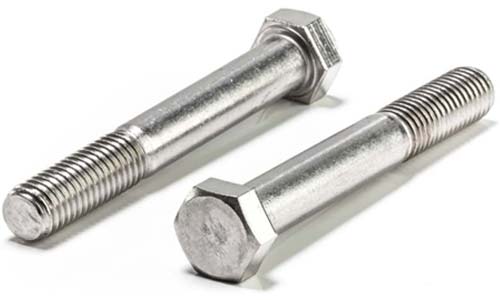
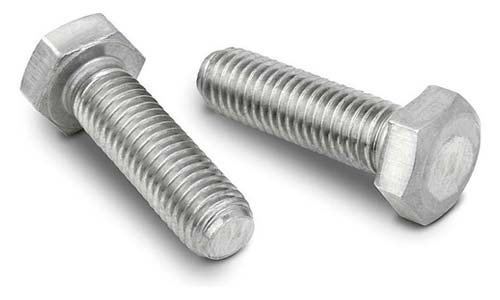
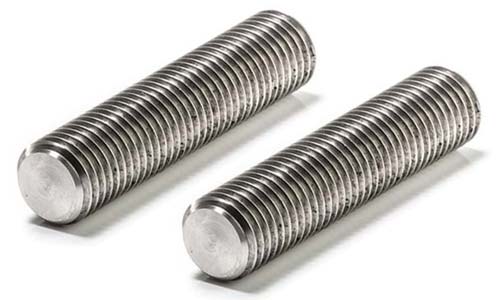
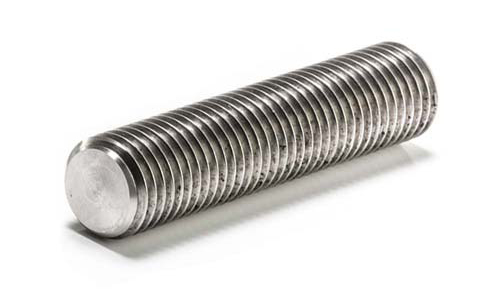
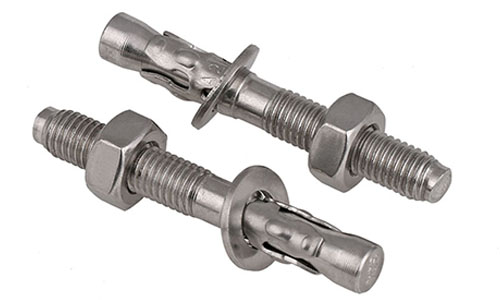
AISI 409 is listed in the FERRITIC STAINLESS STEEL material family. The reference data below should be checked against the governing product specification, product form and delivery condition before selection or certification.
The reference chemistry table for AISI 409 lists Chromium (Cr): Approx. 10.5–11.75% typical; Titanium (Ti): Stabilizing addition; Carbon (C): Low, controlled; Iron (Fe): Balance. Confirm exact limits and analysis tolerances against the governing standard and product form.
The mechanical-property table for AISI 409 lists Tensile Strength: Approx. 380–550 MPa; Yield Strength: Approx. 200–350 MPa; Elongation: Approx. 20–30 %; Hardness: Approx. 70–90 HRB HB. These are reference entries; supplied condition, dimensions, test method and governing specification control the requirements, and the figures are not design allowables.
Werkstoff / EN cross-reference for AISI 409: 1.4512. This comparison does not guarantee interchangeability; confirm chemistry, product form and condition against the governing specification.
View Technical Information →Standard identification and material designation information for AISI 409.
The reference chemistry table lists Chromium (Cr): Approx. 10.5–11.75% typical; Titanium (Ti): Stabilizing addition; Carbon (C): Low, controlled; Iron (Fe): Balance. Confirm the governing standard, product analysis tolerances and product form before ordering.
| Element | Symbol | Composition |
|---|---|---|
| Chromium | Cr | Approx. 10.5–11.75% typical |
| Titanium | Ti | Stabilizing addition |
| Carbon | C | Low, controlled |
| Iron | Fe | Balance |
| Other Elements | — | Controlled according to the applicable grade and product specification |
The table reports Tensile Strength: Approx. 380–550 MPa; Yield Strength: Approx. 200–350 MPa; Elongation: Approx. 20–30 %; Hardness: Approx. 70–90 HRB HB as reference data for AISI 409. Actual requirements depend on condition, dimensions, test method and specification; these values are not design allowables.
| Property | Value | Unit |
|---|---|---|
| Tensile Strength | Approx. 380–550 | MPa |
| Yield Strength | Approx. 200–350 | MPa |
| Elongation | Approx. 20–30 | % |
| Hardness | Approx. 70–90 HRB | HB |
AISI 409 combines the characteristics of its stainless-steel family with grade-specific alloying and heat-treatment behavior suited to its intended service.
Designed for repeated elevated-temperature exposure.
Titanium stabilization limits sensitization concerns associated with excess carbon.
Uses lower chromium than austenitic stainless grades.
Widely associated with exhaust-system service.
AISI 409 is selected for engineered components and bolting where the material characteristics of this grade match the service environment.
AISI 409 is considered for automotive and exhaust hardware when its grade-specific corrosion, strength and temperature characteristics meet the service requirement.
AISI 409 is considered for industrial equipment when its grade-specific corrosion, strength and temperature characteristics meet the service requirement.
AISI 409 is considered for architectural and fabricated components when its grade-specific corrosion, strength and temperature characteristics meet the service requirement.
AISI 409 is considered for machined stainless parts when its grade-specific corrosion, strength and temperature characteristics meet the service requirement.
Design for cyclic thermal exposure.
Check corrosion chemistry, especially road-salt and condensate exposure.
Use the specified surface finish and thickness for fatigue-sensitive exhaust components.
The commonly listed Werkstoff / EN cross-reference for AISI 409 is 1.4512. Treat this as a grade comparison, not a guarantee of interchangeability. Verify chemistry, product form, condition and governing specification against the supplier certificate before substitution.
Our engineering team can help you select suitable materials based on operating temperature, pressure and service conditions.